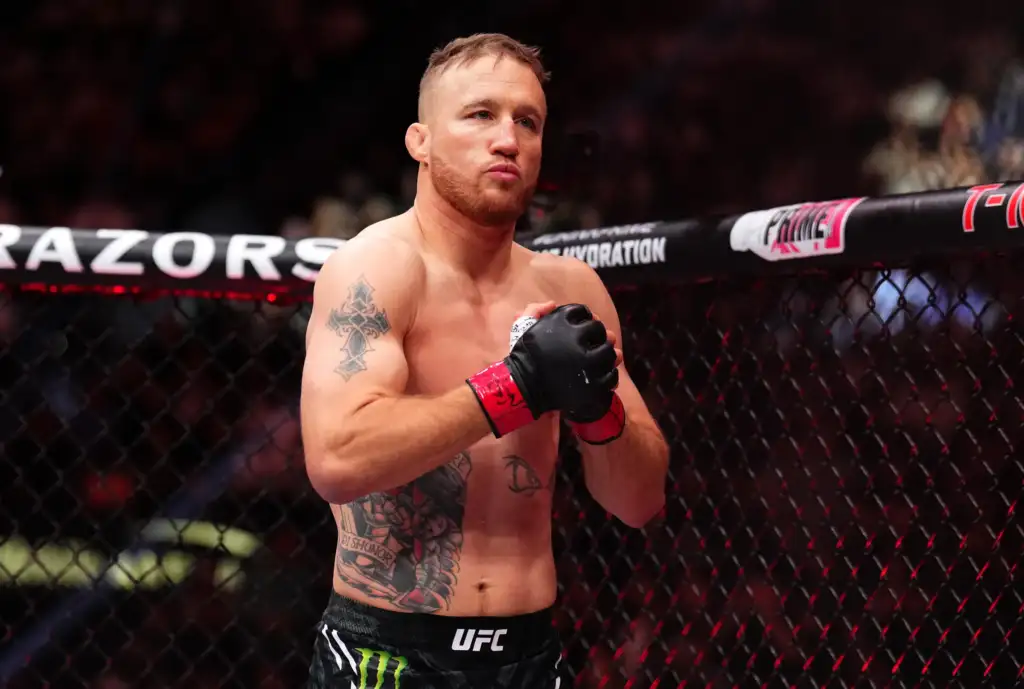
Justin Gaethje did not mince words just days out from UFC 324, raising fresh questions about fighter pay as the UFC officially enters a new broadcast era.
Saturday’s card marks the beginning of the UFC’s $7.7 billion media rights deal with Paramount, a move that ends the traditional pay-per-view model and places every event on the streaming platform. The promotion hopes to kick things off in emphatic fashion, with Justin Gaethje headlining the first card of the new partnership against Paddy Pimblett for the interim lightweight title.
With the spotlight firmly on Gaethje and Pimblett, many assumed the fighters at the top of the card would see a financial boost. UFC CEO Dana White fueled that belief in recent interviews, repeatedly suggesting that the new deal would benefit the athletes.
“I can’t sit here right now and tell you, ‘It’s double, it’s one and a half, it’s triple,’” White said during an interview on 60 Minutes. “But, yeah, fighter pay is gonna be good.”
White echoed that message on the Pardon My Take podcast.
“When you do a deal like this, it’s obviously good for the fans, it’s good for the company, but it’s incredible for the fighters,” White said. “Every new deal we’ve done, fighter pay has gone up.”
According to Justin Gaethje, that increase hasn’t reached him. Speaking during UFC 324 media day, Gaethje made it clear that his paycheck looks exactly the same despite headlining the first event under the Paramount banner.
“I hear Daniel Cormier saying everybody is gonna get paid more on this card,” Gaethje said. “I’m not getting one dollar more than I would have if this deal didn’t happen.”
Gaethje also voiced long-standing frustration over his bonus history with the promotion. Despite being one of the most consistently entertaining fighters in the UFC, he says the numbers still don’t add up.
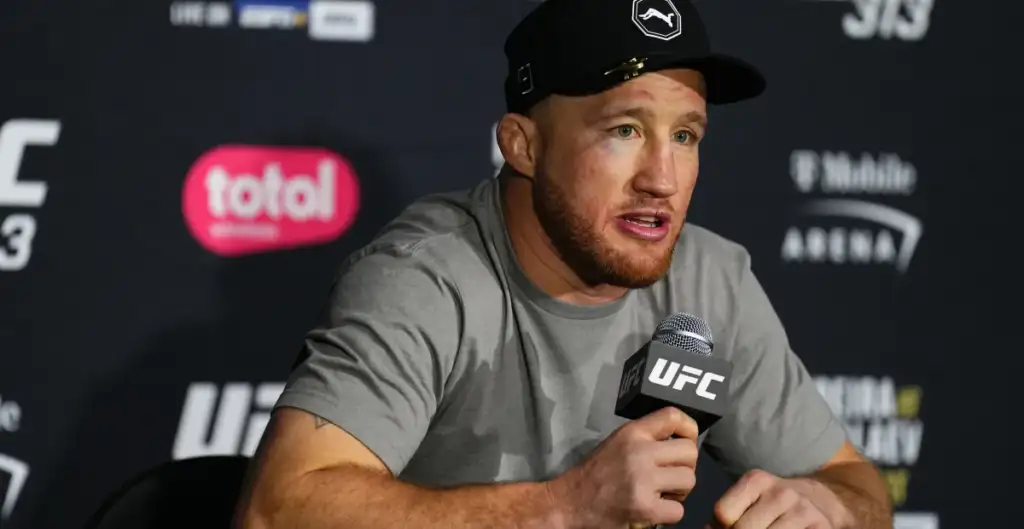
“To have 14 bonuses not equal up to $1 million—it’s not right,” Gaethje said. “It should be a lot more than that.”
The 37-year-old has earned a post-fight bonus in every UFC appearance of his career. Thirteen of those bonuses came at $50,000 each, with an additional $300,000 Fight of the Night bonus at UFC 300 against Max Holloway. Even then, the total still falls short of the seven-figure mark.
While disappointed, Justin Gaethje acknowledged that the extra money helped him take care of what matters most.
“I’m happy to achieve what I have achieved,” Gaethje said. “The best thing I did was invest in a commercial property and buy a house close to my parents. Being able to help my family, that’s huge for me. You can never get that time back.”
As the UFC moves into its new Paramount era, Gaethje’s comments add to a growing debate over whether the shift away from pay-per-view will truly translate into higher earnings for fighters or simply reshape how the promotion generates its billions.