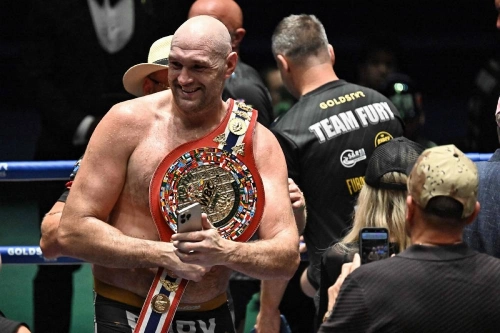
Tyson Fury has opened up about his battle with mental health issues, revealing that doctors diagnosed him with schizophrenia shortly after his 2015 victory over Wladimir Klitschko.
The former heavyweight champion shared the revelation in an upcoming Netflix documentary about his life, where he described the dark period that followed his career-defining win.
Fury unified the heavyweight titles by defeating Klitschko in November 2015. However, behind the celebrations, the British boxer struggled with crippling anxiety, depression and other mental health challenges that eventually led him to seek psychiatric help.
“Words can’t explain the darkness I was in,” Fury said. “I came from the living version of the pits of hellfire. And I 100% thought at times I’d end up in a padded room with the door locked, and that scared me so much.
“I was waking up in the night like this, the anxiety was crippling me. I just could not overcome it. Completely gone, and that’s when I went and saw the psychiatrist down in London. She asked me like a gazillion questions, and I ticked all the boxes, whatever was going on. Depression, anxiety, bipolar disorder.”
Fury was also diagnosed with bipolar disorder around the same period, although he had previously spoken publicly about that diagnosis.
The Netflix documentary also features interviews with Fury’s family, including his wife, Paris, and father, John, who shared their reactions to his diagnosis.
Paris admitted that she initially struggled to accept the news, explaining that she did not associate schizophrenia with her husband.
“He’s a mild schizophrenic and even then the penny didn’t drop,” Paris Fury said. “It was like, don’t be silly. What’s she on about? Schizophrenic, maniacs are schizophrenic. You’re not schizophrenic, you know?”
Fury’s father, John, however, said he could now recognize signs of the illness that had been present for years. He also revealed that he has struggled with the condition himself.
“I can tell you this: When I look back, it’s always been there,” John Fury said. “Me being who I am and no understanding of anything, I didn’t want to see a depressed kid – and if I did see it, I paid no mind to it. But I understand now. It’s an illness, a terrible illness. I suffer with it myself.”
Fury’s mental health struggles played a major role in his career, forcing him to step away from boxing for nearly three years after his victory over Klitschko. During that period, he gained weight and battled alcohol and drug addiction while struggling with voices in his head.
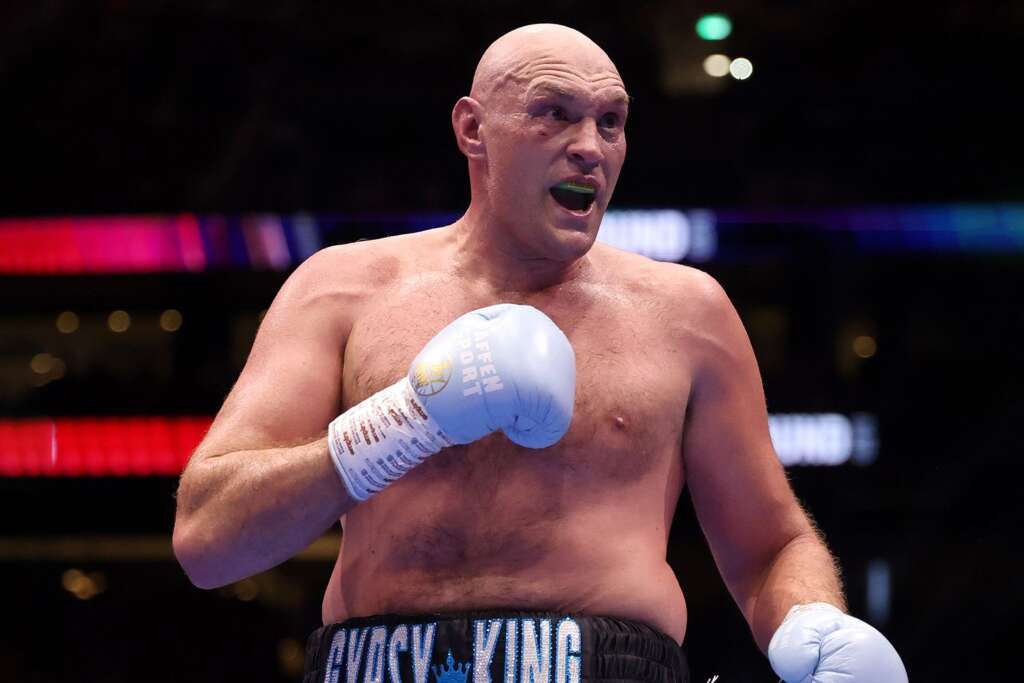
“It got that bad I was hearing voices in my mind,” Fury said. “I wouldn’t be able to sit and have a conversation because I’d be hearing stuff in my mind.
“I didn’t know where to turn and no-one knew what to do. I really needed help, or check into rehab or something. I never got a break from it for years. I wanted to be what I thought was normal again.”
Fury also recalled a Halloween night in 2017 when he realized how far his life had drifted from the success he once enjoyed.
“I looked around and could see all the young people and I thought, ‘I had the world in my hands and I threw it all away, and now I’m a fat mess addicted to alcohol’,” he said.
However, Fury eventually channelled his frustration into rebuilding his career. He returned to training, focused on his family and went on to reclaim a heavyweight world title by defeating Deontay Wilder in 2020.
He later attempted to become undisputed heavyweight champion but suffered back-to-back defeats to Oleksandr Usyk in 2024.
The Netflix documentary, produced by Optomen, a Banijay Entertainment company, and directed by Lucy Wilcox, will premiere on November 27.