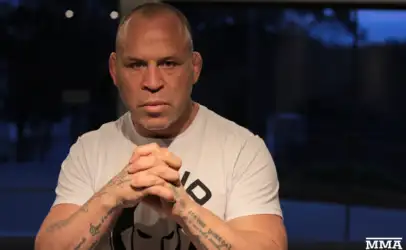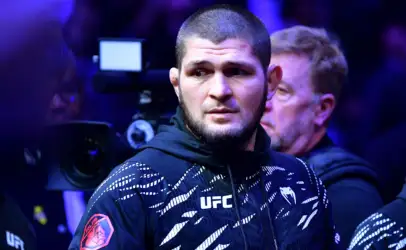
Former UFC lightweight champion Khabib Nurmagomedov has become just as well-known for his coaching philosophy as his undefeated fighting career, and he’s making it clear that his discipline-first approach at his training gym is rooted in carrying on the legacy of his late father, Abdulmanap Nurmagomedov.
The former lightweight champion is now coaching a number of fighters, taking over the leadership spot of his late father Abdulmanap Nurmagomedov, and it’s all business when the training door closes. Just few days ago, Khabib Nurmagomedov sounds alarm on MMA’s direction . Khabib didn’t mince words about the environment he creates for fighters under his guidance.
“When we come to the gym, when we begin our training — all of them know about this — there is no freedom of speech,” Nurmagomedov said at the World Sports Summit. “There is no freedom of speech. Everybody do what I say if I’m coach. In or out, there is no 50-50, and I try to push them very well, and if you look at the result we have in almost every organization, we have champions, and we have some of the best fighters right now.
“We are the best team, and I’m very happy. It means I’m doing a good job.”
Unlike many coaches who encourage open dialogue.
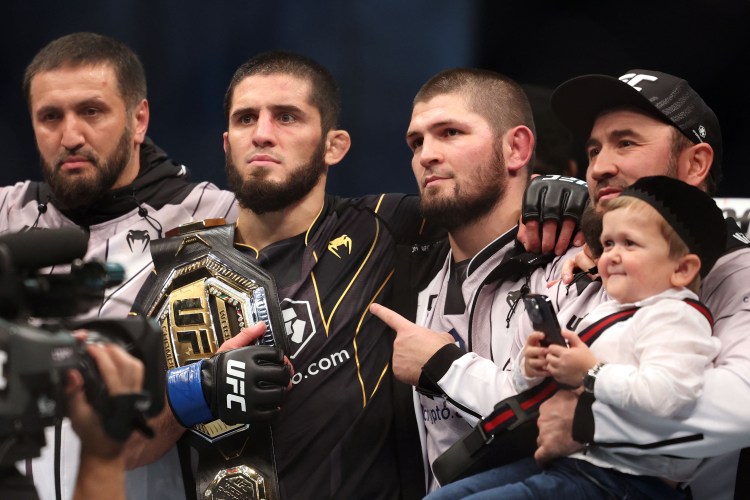
Khabib insists on absolute obedience and discipline during training
“There are some fighters, they take it very personal, competition,” Nurmagomedov explained. “Like, when they lose competition, and right now in these days, you can see how guys, they lost the ball and they just stand. It’s like, c’mon brother, you cannot do this.
“If you’re on my team, even when I play, if we’re losing and he’s smiling, he’s going to have big problems. You have to perform. Anybody can lose, but you have to show your best. You cannot come with me on my team just laughing and smiling while we’re losing.”
After retiring from competition in 2020 with a perfect 29-0 record, capped by a submission victory over Justin Gaethje at UFC 254. Khabib promised his mother he would never fight again. But he did step into a leadership role, picking up the mantle from his father, Abdulmanap, who passed away that same year.
Khabib’s father was widely respected as a foundational mentor not just for Khabib, but for a generation of Dagestani fighters who learned discipline, respect, and hard work under his guidance.
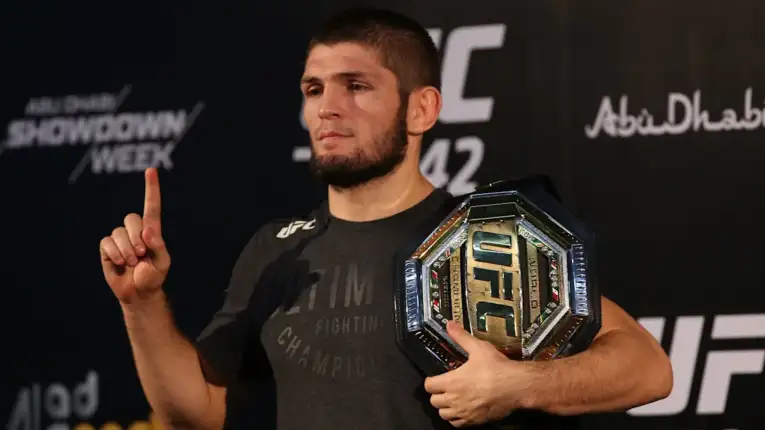
After Abdulmanap’s death, Khabib felt a strong responsibility to ensure the camp didn’t lose direction.
“We have rules, and in our rules, if you’re young, you’re always wrong,“ Nurmagomedov said. ”[Whoever] is older is always right. There are rules and you have to follow them. And somehow, when I finished my career, I become oldest on my team. … It’s like, OK. I have to take leadership. Who is going to take over? Somebody has to lead the team. You cannot just leave them alone. Today, I’ve become success, I was champion, I was on top, OK. See you guys tomorrow.
“ It doesn’t work like this, and I’m like, OK. I look around [and wonder] who is here? Everyone is younger than me, and my father, he passed away, and I’m like, ‘OK, I have to take this leadership, I have to lead this team, and I have to keep continuing my father’s legacy. I understand, I’m ready for this. Some people, they are not ready.”
Khabib’s philosophy isn’t just about barking orders, it comes from a deeply held belief that unwavering discipline breeds success both inside the gym and in competition. He expects fighters to take training and performance seriously,